Castration Movie Chapter iii. Junior Ghosts – Premorphic Drift; a fragmentary passage (2026) | review + analysis & reflection
Inside, the ordinary sounds of young women winding down -
What follows isn't an explosion of violence...
but something colder and worse -
the slow conversion of a familiar space into a trap.
- Castration Movie Chapter iii. Junior Ghosts
This is the first entry in the Castration Movie Anthology that I'm able to give a solid star rating instead of just a 'heart' on my letterboxd, and a solid review instead of esoteric poetry (there will still be some of that). Unfortunately this chapter is (or fortunately? im not sure) the most bleak of the anthology so far. There are very few, if any, moments of reprieve or comfort or joy or pleasure. There is a lot of truth. So if you find things like joy and reprieve and comfort in things in truth, you will get them. However ugly, jagged, twisted, fucked and miasmic that truth is, than you will find those things here, no doubt. No doubt.
The opening scene is disjointed from the rest of the film but manages to set the tone straight away. This film starts off crude and bleak and it never really swings much higher in tone from there. Castration Movie Chapter iii. wins the coveted "cried so hard I got a migraine and puked" award, which pretty much entitles it to a thorough review. Cus like nah fr tho haha how does everyone keep going with so many ghosts in your rearview. I guess you either get more cruel or you get more free or maybe both. Everyone is carrying ghosts and time is the little death that makes them. You have a ghost you left behind too. Maybe they don't haunt you. Maybe they just haunt her. Maybe she's making more little ghosts while your shadow keeps her up at night. I'm dying in my sleep every night and remembering another ghost in the morning.
You can't put hurt on a scale. I know a lot of us wish we could. So I could know and I could make so many of the things I suffer and that others suffer make some kind of sense to our simple eyes.Unfortunately this film hits me in a particular way because I've had the displeasure of being both the partner repressed and then newly transitioning in a relationship and the partner of a formerly repressed, newly transitioning person. I've also been the partner of a repressed trans person who had full support from me to pursue their greatest truth, who refused it for themselves, continually repressing, continually deteriorating in their repression until the relationship rotted, just one consequence of watching you both turn translucent in front of each other. One of the most sore spots of my past is being the person in that situation who had to leave, being treated so horribly by this person I loved so much and wanted to love into the most sincere version of herself but still knowing that leaving was the right thing to do because you have to be alive and ||||||||| is going to kill you, but eventually learning that she did at some point take that leap and become who she was meant to be, and what you have now is a consuming byzantine black hole of jealousy and envy for the life they're living now, that is free of you. You were a part of the equation and now you are outside of it. So maybe I have just lived too many lives. There are too many ghosts. The passages too fragmented.
Everything hurts and I wish I didn't have to understand time the way that I do. I wish I didn't have to remember everyone. I wish it was easier to forget. I wish getting her the makeup and the clothes and never once being fixated on my own gaze or being scared of what her own gaze not breaking from herself might have been saying meant it would all work out and she would become someone who still loves me and loves me in a different and better way. It doesn't. It doesn't and im sorry that it doesn't, for both of us. I fucking love brunettes. I am so sad and angry that both subjects in this film are brunette. I am even more sad and angry that I never got to see the piece of shit brunette who stole 7 years from me in a leopard print dress. I am angry that I am angry about it. I am angry that I see my sentience as a curse when I am plagued with the simultaneous knowledge and lack of knowledge of her being. I am being haunted all the time. So what are you going to fill up the cavity with? What will she? Sometimes the cavity gets filled with freedom. Sometimes cruelty. Sometimes both.
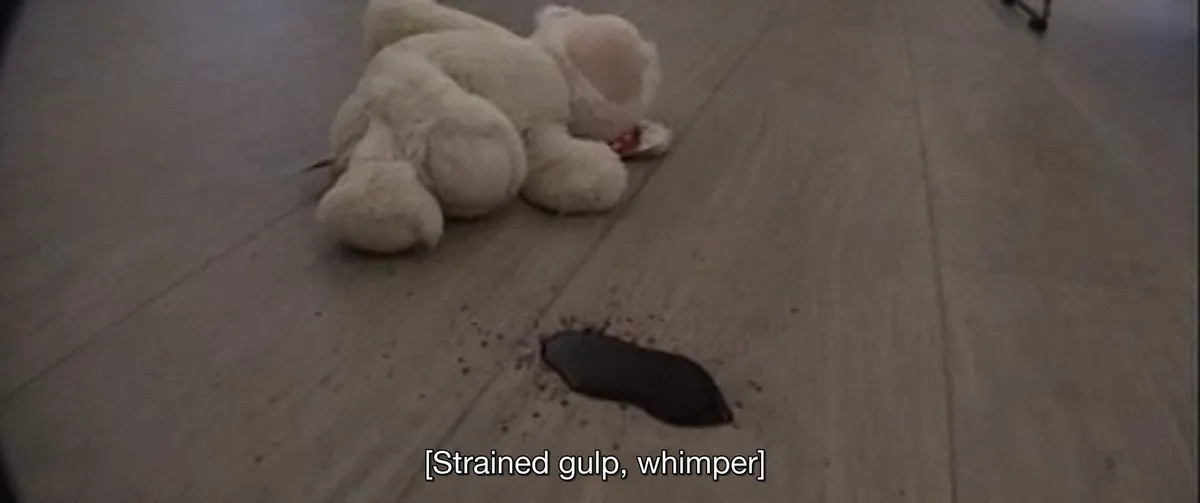
In a similar way to Camp Miasma, chapter 3 made me think of all the things I've done while I wasn't me, and all the things that were done to me by people who are no longer who they were back then. But instead of leading me down a road where I think of all the ways I might be able to free myself from the fences that have been constructed around my ability to access pleasure, I am thinking about all of the joys the person I never got to know, but I used to know is experiencing now, now that I will never be a part of this mythology, and all the nightmares I have to have, are of someone who does not exist anymore (never existed????), and I have to live with having nobody to blame and no way to conjure up a figure of this person in my head except for as a ghost because any other way is too cruel or too free, so instead I am just haunted, haunted, haunted, fucking haunted.
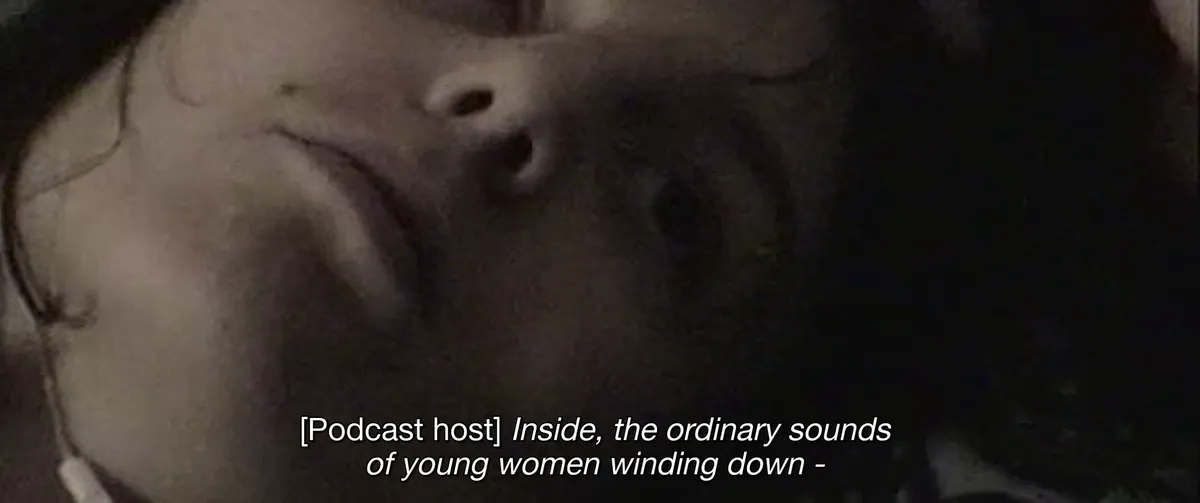
Everybody remembers things in their own way(s). No two of us have the same way of remembering. I'm not talking about the facts im talking about how we feel, or don't. What we said and what we didn't. How you laughed and when you stopped. I have to think of her of a ghost because I can't think of her as someone who just changed because then I must ask what conditions I created that rendered me an acceptable place for overt violence to land and what it means that only when there was no longer a person (acting as a place) to tenderly hold the sadness and the anger and the existential loneliness and the wrongwrongwrong, could she become herself? "conditions I created" and I am talking about a version of myself that no longer exists not only because they have changed so much in identity and understanding of the world but because I am a Big girl now and I was not then, I was not, I was not at all, I was nowhere near it.
I do not believe that Izzy sincerely believes that the entire world would be a better place without that teenage trans girl in it. She wants a world (her world) that exists where she doesn't lose the everyday humdrum of the predictable misery she's created with her lover of nearly a decade. It seems ridiculous someone could spend 9 years miserable and fight in any way to keep that, but people spend a lot more time in abject agony and keep choosing it every day. Even consistent misery can be preferable to chaotic improvement. Everyone is more afraid of change than they will let on, even if the changes are likely to be good. I spent (she stole!!!!!) 7 years being abused in what somehow didn't end up being the worst relationship of my life and I still routinely dream of (am given nightmares about) the person I spent those 7 years with even though they were quite miserable, all of them, from the very start, and those memories do not at all reflect a life I wanted to live then, nor one I'd want to live right now, nor do they reflect whoever she is now, that's a ghost of the future and the past. I don't know what it means and it doesn't really matter. Because that was then and this is now. I was asleep and now I am awake, I will be asleep and awake again, and again and whoever the fuck that is or was will keep haunting my unconscious imagination.
When Tiff goes to talk to Izzy and give her the Big News, Izzy is wearing headphones, sitting in bed listening to a true crime podcast. The heightened paranoia and fear of a white woman in danger, a specter of victimhood. Someone is always waiting in the shadows with a knife. The knife could be a metaphor. All she knows is that she is scared, and that it hurts, and that she bleeds. This is a reflection of the psyche of a true-crime obsessed (white) woman. Is she in danger? No, not really, not really at all. But does she feel it? Why? Because she should. Because you never know what you can never truly know and what you can never truly know is if the moid in your kitchen is coming to slaughter you. Again, the slaughter is a metaphor. Or maybe it isn't. It feels like this could almost be a kind of subliminal messaging to both parties. A statement of, this feels like murder and it should, this feels like the worst kind of harm and it should —- for both of them. Izzy should feel like she is being violated and killed by the specter of the person she thought she knew warping in front of her eyes, this sudden and violent change should make her suspicious and Tiff should feel violated and killed by her partner not immediately and enthusiastically accepting this news and diving headfirst into changing everything she has known and ask one million joyful questions about her and for making it about her own feelings instead of this incredible revelation that Tiff has had and is trusting Izzy with. It feels like a subtle way to tell any person in the audience no matter whose 'side' they might be on that they are right to feel violated by it. Or at least, to intensify this violated feeling, and to perhaps call it into question. Who is right to feel violated?
The fact of the thing is that everyone is self-centered to some extent, and that is okay. But nobody is more entitled to being so than anyone else is. We all become a subject by virtue of being an individual with a consciousness.Relationships of any kind cant work if the people in them cant accept that everyone both is and is not the main character of our own lives, and sometimes there are events in them that push us toward increased self-centeredness. Transitioning is one of those events, so is like…having a baby. Transitioning is like having a baby except you yourself are the baby. So yeah, it's self-centered.
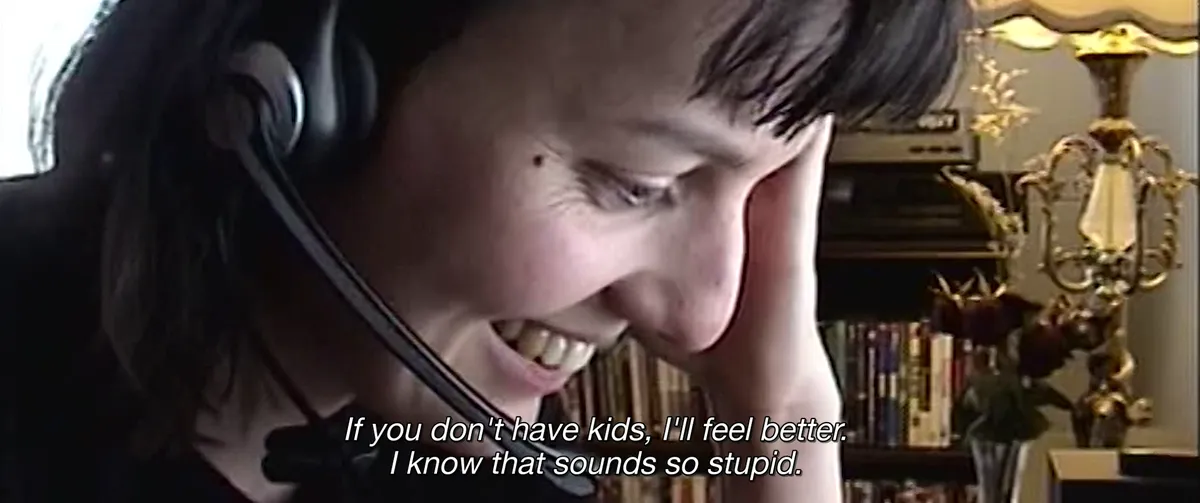
It sucks cause this experience Izzy is having is envy, this is jealously, this is bitterness, but it is not the bitterness of a becoming that should not be, it is the bitterness of the unbecoming of what was, which arguably should not have been for as long as it was. Nobody is more entitled to being self-centered than another. Everyone exists and everyone is having an experience. Both of these experiences are true regardless of which you decide to sympathize with or consider the most moral and ethical position to hold.
There are a ton of long shot conversation scenes where the immersion is really high, I am very like, in it and I believe what im hearing and, and then I am abruptly pulled out of the immersion by some sort of use of vocabulary that doesn't feel like it fits in the place where its meant to be, or rather, its like shoehorned in there. To make a point where the point isn't landing naturally. The film does a pretty good job of hammering in that Izzy is someone we shouldn't sympathize too much with in the next scene where she consistently and dispassionately misgenders and deadnames Tiff the entire time she is having a conversation with a friend about this revelation. This is unfortunately another conversation that feels halfway real and halfway not, and jarringly so. Sometimes things make sense and then all of a sudden Izzy is saying something that feels deeply incongruent with the rest of her thoughts. Maybe that's on purpose? Maybe Louise meant to say, through Izzy saying things like "maybe he's just been bored at home and on the internet too much"that she is projecting, and its actually Izzy that's been radicalized by her online activity? Perhaps. If so, I guess the weird phrases and buzzwords that happen in the conversation make sense. but it still feels weird, and there is a flow that is broken in otherwise decent writing and dialogue.
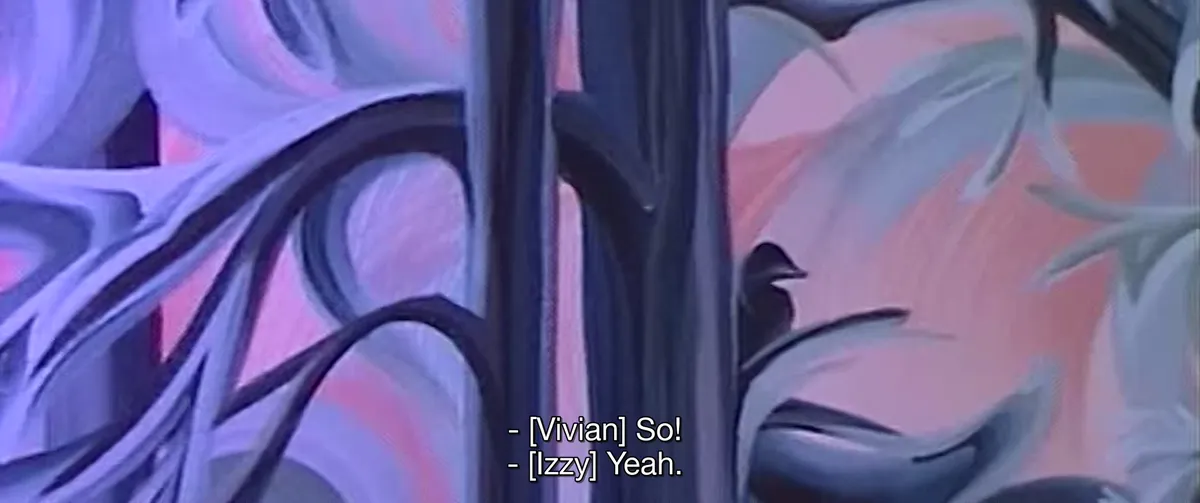
The latter quarter of the film is the best of it all, once Michaela 'traps' Sinclair returns as the tough loving group leader there to help other trans women understand the reality of their own being. I do appreciate this sequence a lot, because it lays bare the question that people don't plainly ask — how much does this tough love and honest guidance actually help? and how unevenly is this criticism given from girl to girl and why? Jane Schoenbrun has an amazing cameo in what is my favorite scene of the film, where they are able articulate succinctly how hypocritical and selectively the rules we create are actually applied in reality. It does not matter if a trans woman is not voice trained, has short hair and wears flannels and doesn't want to change their face much. If and only if she is not otherwise some sort of 'optics nuke', if and only if she has some sort of other prestige and acclaim that renders her womanhood crystallized through sheer virtue of accomplishment. It is really bold to shake the room like this, in such an overt and subtle way and I really applaud Louise and Jane for this kind of rawness. It's ugly. It's a genuinely and sincerely ugly thing that is being admitted and understood through the fiction being weaved here, and it is a kind of gross thing that im happy to see. its like when you puke and feel. a lot better.. its kind of comforting to see a sequence of a film that says 'you dont have to be beautiful to be safe, you just have to be talented, or loved, or feared, or rich or resourced. You can survive, mama <333'
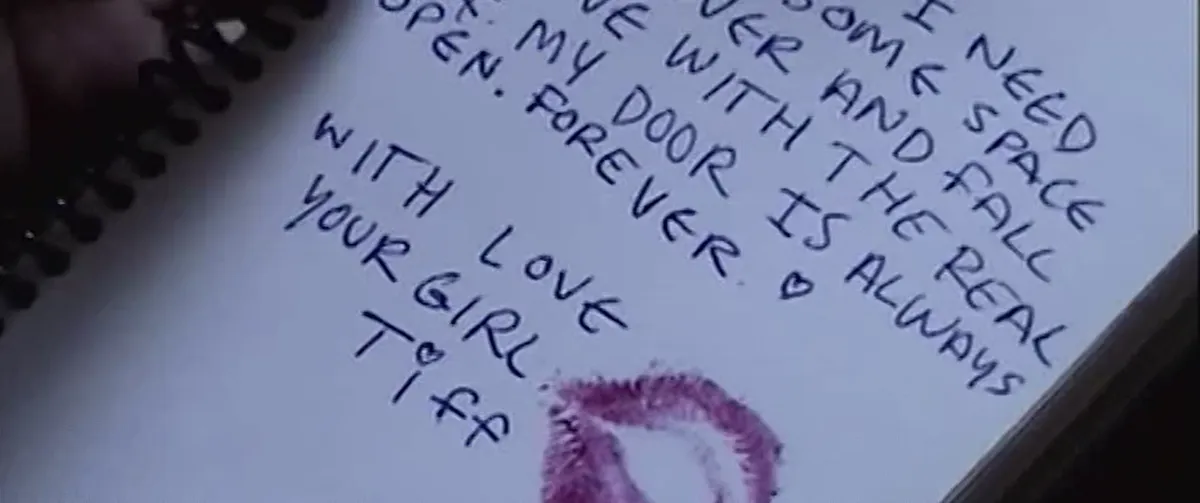
I cant really talk much about the end of this movie honestly. It just hurts too bad and makes me wander too far off of the subject that is this film and my criticism of it. I can say pretty solidly that the last 20 minutes of this film is, by far, some of the most Requiem of a Dream, Come and See, I saw The TV Glow type shit. Its bleak. And its really really really really incredible, but it hurts. I dont know if I can ever watch it again. Its horrifying. I'm going to put so many screen-caps that I took while watching this film inserted into this essay because I dont want to look at them anymore. I cant hold back my tears when I look at tiff's letter or I see the way she puts lipstick on but instead of putting on a tight dress she wears the clothes she is wearing at the start of the film and she still looks like her and oh god I am going to throw the fuck up i am so fucking sad I am so sad I am so sad I am so sad I cant believe I got to know someone and now I never get to know the person they really are and the person I see in my dreams isn't real they're a fucking ghost and so am I holy fucking fuck I cant do it anymore I just cant.
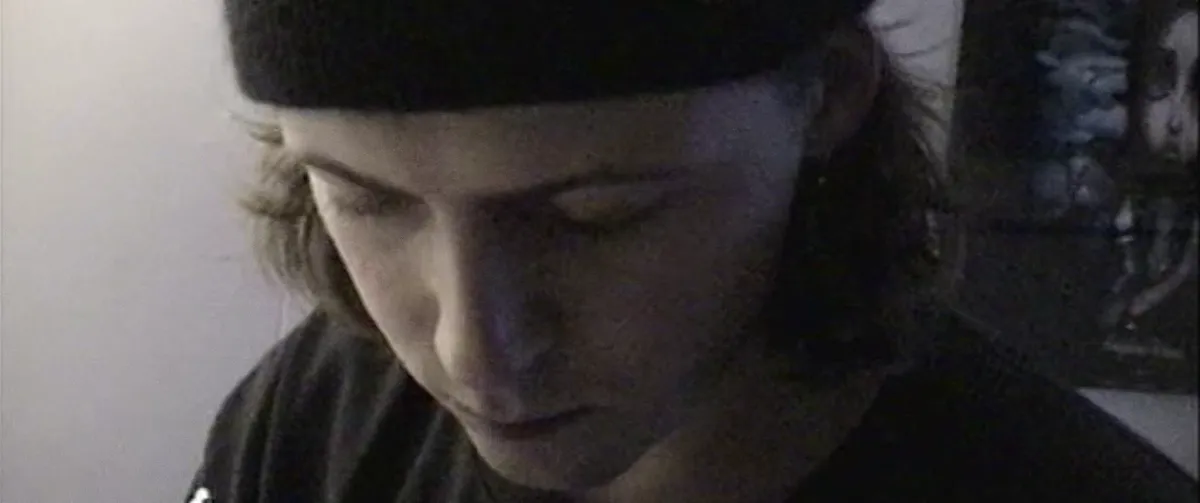
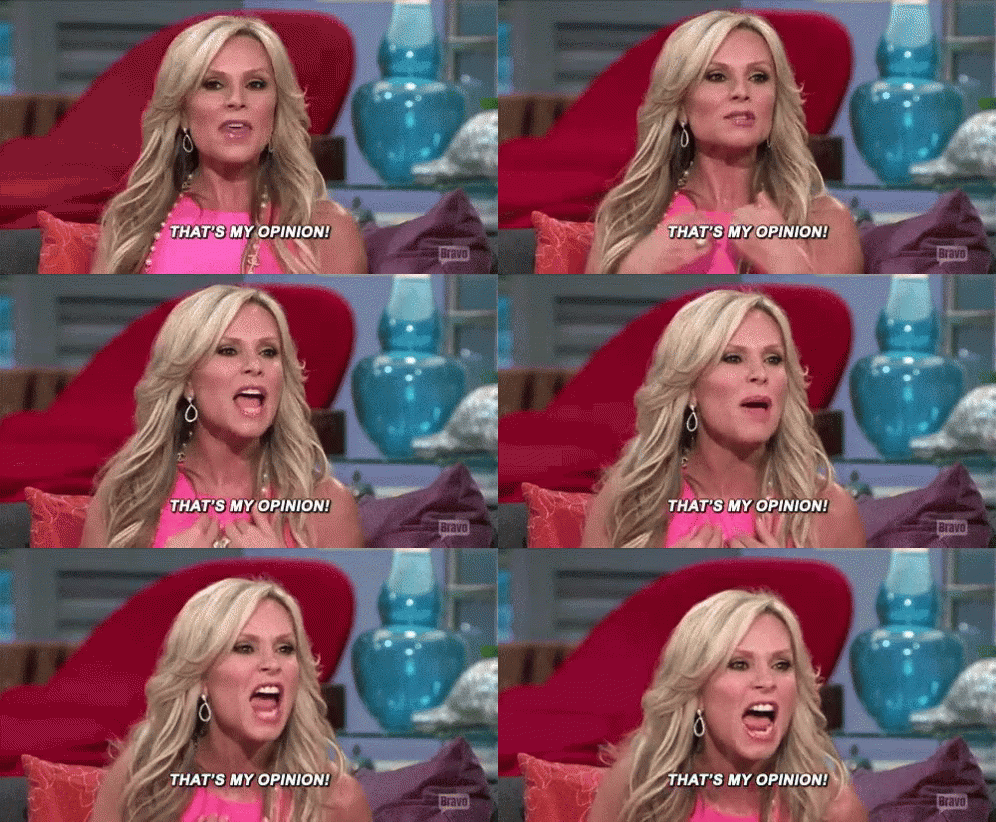
By far the best iteration of Castration Movie anthology yet. As Micah said in their review of this film, sometimes a directors most accessible work is the best one. Its true here. But I do feel like the impact of this one wont hit as hard if you haven't seen the first chapter. Good thing, though, the first chapter is really all you need to see for the impact of the third to land, in my opinion. Like I said earlier in this, Chapter 2 was was more of a funhosue mirror. It was bleak, but it was like a carnival ride. Utterly ridiculous compared to the first and third chapters. Might as well be a 5 hour long intermission. It's acclaim I think has a lot to do with the volume of friends and friends of friends and friends of friends of friends that feature in that film. I refuse to pretend like people favoring art that their friends and friends of friends make isn't a thing. It's a thing, and I think that's a part of why Chapter 2 is so popular in contrast with Chapter 1, what I feel is a far superior film that still showcases plenty of incredibly talented trans people. Castration Movie chapter 2 at this point feels largely like unfortunate Dimes Square Slop with a token Black trans woman around so Louise and Co. can cease the 'why are there no negroes in your friend groups or talent scouting pools' criticism for the rest of this anthologies runtime, and so that the 'community' of people these films are meant to depict or satirize or honor or whatever the motive is, can continue creating and solidifying the image of 'trans culture' that they hold as most evident and authentic. It's whatever, yknow. I know thinking all that makes me an uncool moralfag or whatever the ostensibly leftist marginalized people who have become completely irony poisoned assholes in the pursuit of not being a 'woke buzzkill' would call me. I don't really care. That's my opinion dot gif.
There is a lot of humanity in this film. I am still perplexed as to what Louise means to say, and what she is meant to tell us specifically about how she feels and perceives. Sometimes I wonder what the point is, y'know? maybe its just making transgressive art. Being a good filmmaker that makes topical work that stands the test of time. Maybe there's nothing about what Louise actually believes in this.
I do hold a lot of criticism toward this Anthology for holding us hostage in the perspective of reprehensible people that I don't really care that much about the interiority of unless we are doing something sincerely complex with those characters (im thinking a book like Madeline Blondeau's PENITENTS, where there is a character who occupies a lot of the pov of the writing who is a terfy bigot, but its not just. for no reason. it means something that we are forced to inhabit her Pov, like TLOU2). In this anthology, I dont feel like ive gotten much out of inhabiting Keller or inhabiting Izzy, at least not for the time that we spent with them. I can also say that I think this film drags even with its shorter runtime, and is so devastating to watch because it sort of drives the same point home over and over and over and over again and it sort of makes that message more and more harsh as it goes on. That's not necessarily genius filmmaking as much as it is inundation with horrible shit that hits so close to home it has to hurt, it literally can't not hurt. A Little Life core.
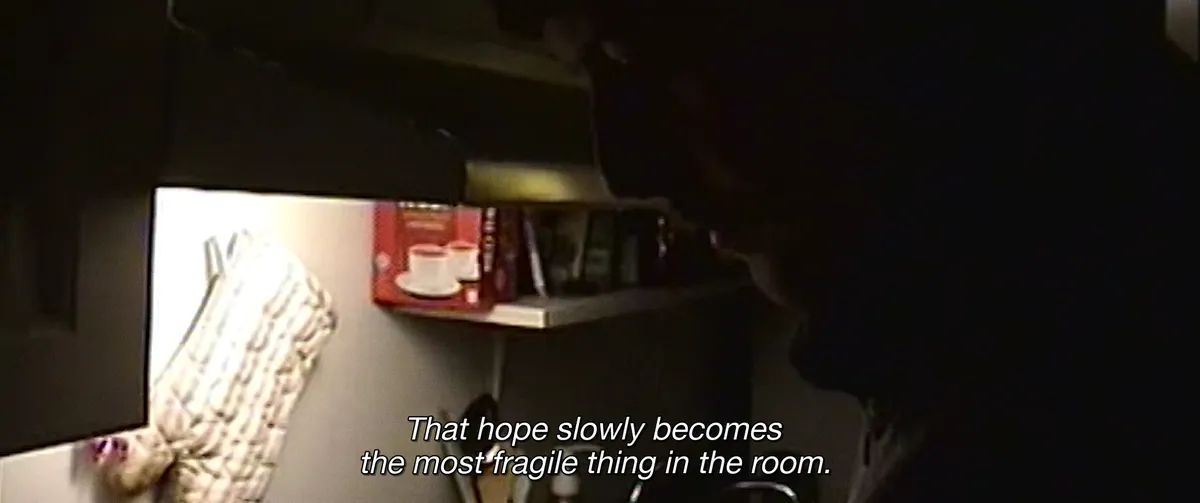
I think its something to note that during a q&a after a screening of this, Louise said that this film, the whole project really is like a big practical joke. So in some ways, I feel bad for myself, and for all of us who are taking it seriously, because I don't think we are really in on the joke. She also said in an interview with cinema on the spectrum, that this film is less autobiography and more of an exercise in psychoanalysis. So maybe she isn't sure what this all says about her and will only know once its all in the rearview. I don't need to know the people who make art I care about. In fact, I doubt I will ever sincerely know any of the people whose films I write about. But I live in a society, and I live in the microcosmic transgender society, and I live on the internet, and I'm dying every second of the day. I don't need to know Louise, and I don't want her to be a perfect woman with perfect politics. I guess I just have to figure out how to justify my continued viewership of these films, and beyond that, my promotion of them to other trans people when I just don't understand what the point is, and we all still have to live together after the credits run. I just don't know. It's complicated.
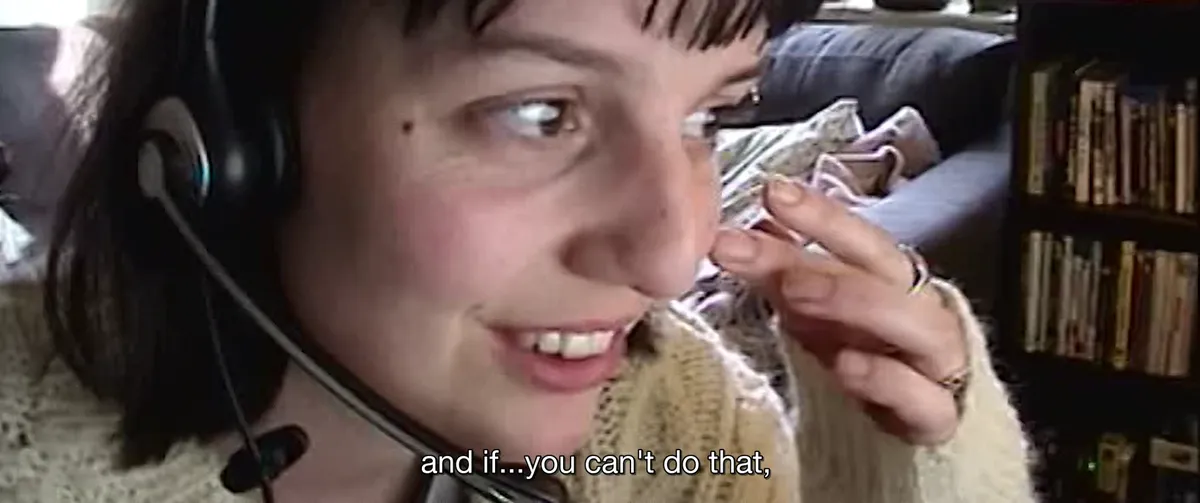
This is a beautiful film that hurt my heart a lot. I will continue watching the chapters going forward because I know that characters from the first chapter that I care about will be returning. I'm also really crossing my fingers that Aofie Josie Clements returns, not only because she is an exceptionally talented actress and musician, but because she's my Castration Movie bias. I don't know if I'm gonna write as much as I've written about this chapter for what is coming next, because to be honest? Writing this kinda fucked me up a little. It took a long time because I kept noticing little pieces of things I typically keep very contained, slowly slipping out of their designated hiding spots. I will let them out on my own time, thank you. A great movie. Hard watch. Not as beautiful as the former two entries, so I hope there is some more unique camera work and the kind of visual style that I've come to excitedly expect from Louise's work.
more film reviews by salem void ⇣
the rest of this entry is personal reflection I wrote alongside this review and analysis. not much about the film, or any critique of film itself, but more about my relationship to my writing about film and writing in general. continue if interested! but castration movie iii analysis stops here basically.
a not so quick reflection
Writing about this movie, or I guess, my lack of writing about it alongside the presence of daily thoughts about it, has brought me some sort of understanding. I'm always trying to figure out why I feel so compelled to write things down, to analyze them, to give my thoughts and opinions while I also lack the executive functioning to actually sit down and do the writing (at least, to the volume with which my thoughts would suggest I might). It's hard for me to write about certain films in a solid, definitive way because sometimes I don't only really love a movie and have a lot to say about it. Sometimes a film depicts things that I will likely be writing about for the rest of my life. And that's where the feeling that I can never be finished with these reviews or analyses comes in.
How can I be finished when I have so many thoughts about the relationship between Izzy and Trent? But the truth of it all is that I am not actually interested in writing thirty thousand words about Izzy and Trent. Nor was the point of the thirty thousand words I wrote about Crimes of The Future (an essay I lost the rough draft of, the timing of which also lines up with my loss of writing momentum) what David Cronenberg may have meant to tell us through his depiction of surgery as sex, but rather my own relationship to my body, this body and it's relationship to performance, surgically crafted identities, the meaning of the body and how it does and does not translate from culture to culture, the deep dark hole of my yearning for some fact of my material existence in conjunction with the land that sustains it, losses of ways of being, expanses of ways of being, limitations of language, and the ways those limits also cage our bodies. I don't really give a shit about Izzy and Trent, I mean I do. As much as I give a shit about any characters that I have come to know through media. But I dont care about them, or even the entire anthology of films and future chapters yet to come, to write about it for the next 6 months, like I did with Crimes of The Future. I'm not writing about them. I'm writing about the way I lost so many years living alongside someone who was not the person I thought they were, but they were someone I loved anyways. I'm writing about the way that I don't even understand if 'lost' is the right word to describe what happened to the time I spent. I'm trying to figure out what of my own memory, while all other pre-existing layers are still present and at 100% opacity, was sincere and what was an invention of convenience or burden or or or or or or. I'm trying to figure out what I could have done to 'lose' less of my time. I am trying to figure out why mine is still getting shorter and hers is getting longer. I am trying to figure out why 7 years is so long and so short. I am trying to figure out who that is in my nightmares. I am trying to expel it without giving it a face or a name because I can't let myself do that because I am trying not to give myself more nightmares.
No, this is not the first time I've recognized that we project onto fiction, that many filmmakers create with the intent to provoke discussion and introspection, nor is it the first time I have ever felt that fictional characters put on screen have paralleled passages I have temporarily inhabited at one point or another. It's a lot more about recognizing my own practices that may have served me once but might be stunting me now. I love writing about movies, and I really value all the work everyone who has a hand in making them puts into them. I think it's a lot easier to say that and a lot easier for most people to openly relate to someone saying that than it is to say and openly relate to someone saying "I love writing about myself, and I really value the voice I've come to speak, and all the people, places and things that have participated in weaving the mythology of me." maybe my perspective is skewed and there are a lot more writers, critics and analysts that feel very encouraged to expand upon the minutia of their insides than I feel.
Either way, the reality is that talking about films, talking about characters has been a buffer. It's easier for a lot more people to swallow whatever you have to say about identity, about human relationships and the ways that we navigate them when you are talking about characters on a screen who were written to be toyed with as we are toying with them. That buffer has both helped and hindered me as a writer. There are occasions where my reflections on a film are personal, poignant and succinct. And then there are occasions where my reflections about a film stop being about a film and start being about me, and then I will never write about the film, because I feel I have too much to say about it, but in reality I have too much to say about me, but I fear pretentiousness, blustery and overconfidence. I suppose I am getting to a point where I recognize I am not satisfied with only sitting down to write thousands of words when I am writing about the art someone else has made even though I really love writing about films and I would love to do that for the rest of my life.
I do not think movies would exist at all if everyone was as concerned with avoiding making themselves and their lives and experiences a part of the art they create and mythology they weave as I have been. Its true that sometimes a film is more self-important than others. Sometimes a writer or director is very clearly writing about themselves, their friends, the conversation they had two years ago they can't stop thinking about, some ex they fucked over years ago and have not gotten over but have not and will never apologize to in any way that matters. I'm not here to say if it's always good or always bad to make art one way or another. Just that I want to be more involved in my own craft than this feels and in order to do that I have to start writing about myself at length and in order to do that I have to get over feeling like a selfish, egotistical, conceited arrogant prick who is proving my validity as all of those things with every single word I type that subjectifies me instead of someone else or something else. I don't want the majority of the writing I put out to be writing about other peoples writing. I love films, and I am going to write about them for the rest of my life. So what I have to do in order to make sure that I do both of these things that I want to do, one thing I am encouraged to do and one thing I am not, is practice some sort of restraint and set some boundaries around my critical and analytical writing. All my writing is personal, however plain a review it might be. But I do think there are places I don't have to go when the subject of the writing is factually not me, but the work, the film itself. And with that — I'm going to go watch another movie. Or maybe I'll try to write, and I'll pretend it's about a movie while I know it isn't.
- Salem Void, angelbear