Teenage Sex and Death at Camp Miasma (2026) | review + analysis
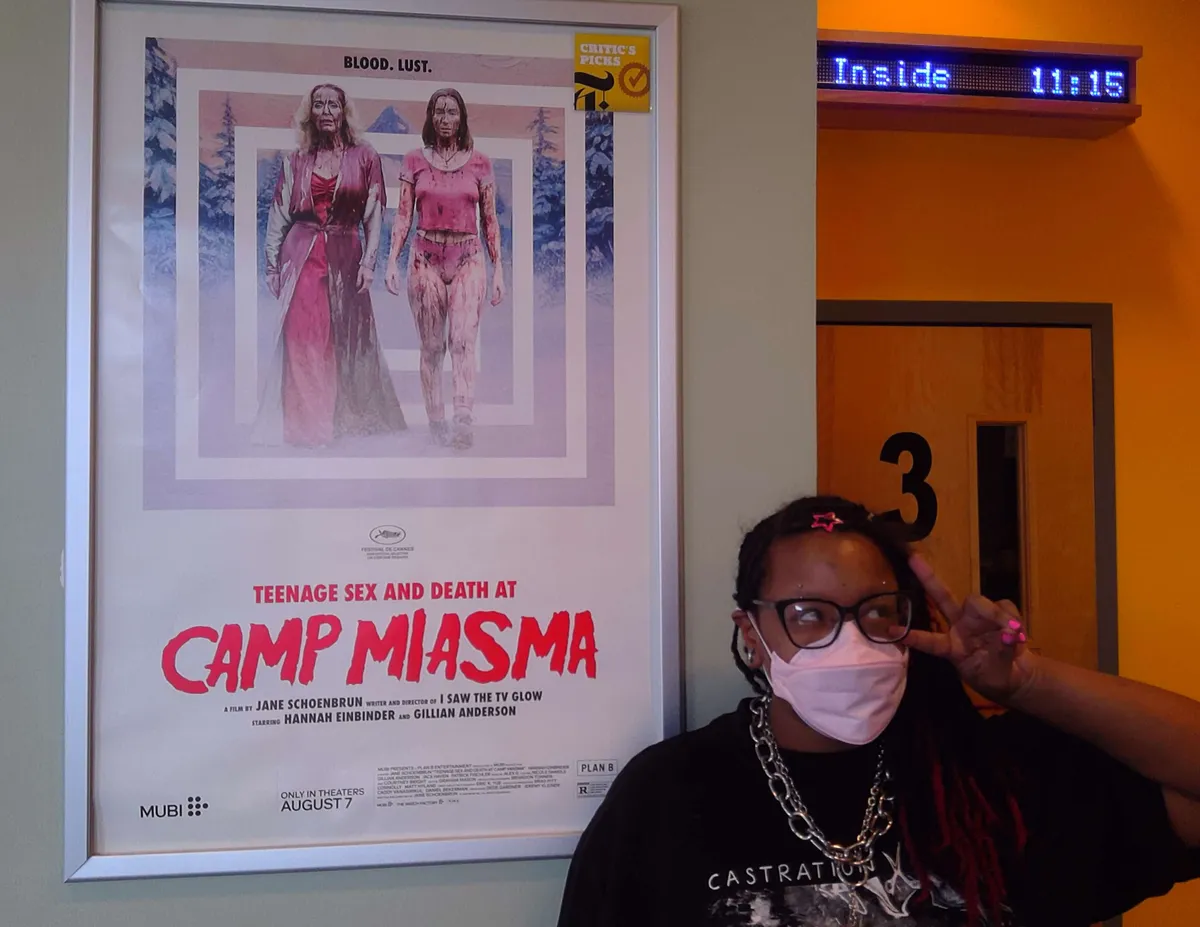
At the end of the day it's about shame. Your shame, my shame, the director's shame, the audience's shame, the shame we feel about our bodies, the shame of our desire for others and our desire to be desired.
There is no mincing the representation of stabbing as penetration and blood as cum, death as orgasms. It is in the title and it is in the introduction of the film, along with a very very early Ray Blanchard name drop. I do think his name is here early, and in such a pivotal position as the director of the original Camp Miasma for important reasons. He is a sort of dark entity that hovers over the sexualities (and often personhood as a whole) of transsexual women, and in this film he plays that position in a direct way, all pun intended. This is Jane, early on letting their audience that (hopefully, and in this case definitely included at least two) includes transsexual women, that the specter of darkness and shame that is being cast over the character of Little Death, and over Jane’s self insert and our main character, Kris, is not one that is borne out of a shame that we carry innate to our beings, but one that has been manufactured, a shame that has been taught, reinforced, reified through the media that we hate and even sometimes, the media we love. Weirdly enough, it made me feel a lot more safe engaging with the more uncomfortable parts of the film, but in a way that still reflected back on Jane as a filmmaker and didn’t just offset all painful implication to the specter of Blanchard. This film is very aware of the existence of transmisogyny and it plays with this dynamic in overt and subtle ways throughout the film, one of my favorites being the Louise Weard cameo as ‘queer assistant’, largely silent on a business zoom call for the production. It’s a whisper and a bang all at once. If you get it you get it.
The nods are quite overt in a way that is exciting and makes me want to watch the film over and over again to find more easter eggs and homages. One I want to mention is a Shelley Duvall namedrop during the beginning title sequence, may she rest in peace <3 I also really, really love that Jane did not shy away from letting the audience know that this is a self insert piece. In the title credits there is a still photo of our main character Kris, and around it, in the most darling font it says, ‘directed by Jane Sch♥enbrun’ – it’s adorable, and a really amazing way to put myself in the headspace that the main character, in whatever way she might be different from Jane, is meant to be a self insert. So, for the rest of this review, please understand that I was very easily able to see this film as being from the perspective of a nonbinary transsexual lesbian woman who is a filmmaker and a film lover. And in that way, it became obvious to me early on in the film that all of our criticism, whether good or bad, whether we love it or we hate it, the act of saying something about it and watching it at all is the point, because we are being made by this creation as much as Jane has made it for themselves.
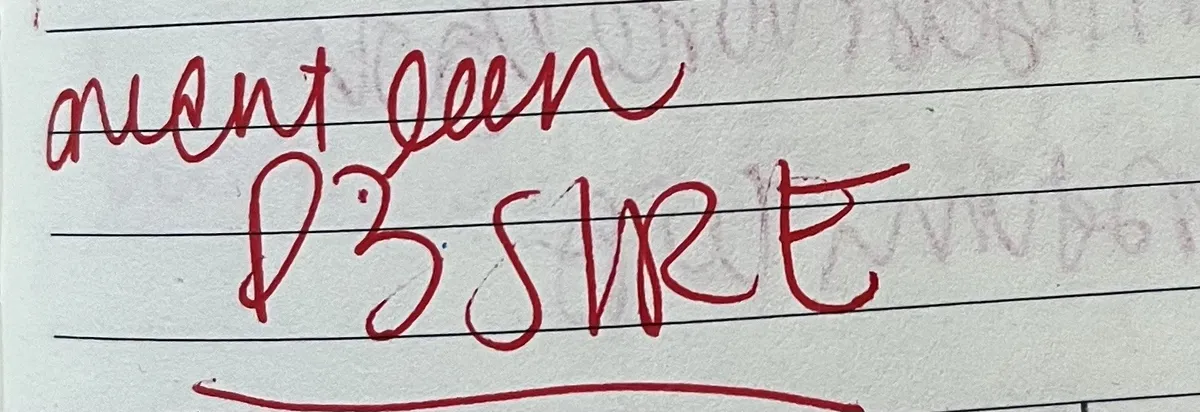
I have one criticism that I will refrain from calling ‘nitpicking’ as my instincts might lead me to doing, and as many people might call it. I do not like the contribution this film makes to further cementing the bastardization of the term ‘woke’. It sucks and I don't like it. It's not that big of a deal to me in the super grand scheme, honestly, but I don’t like it. We, as artists, are all contributors to what shapes and defines culture, and if we think it's annoying and lame that people have made ‘woke’ a word that means ‘sanctimonious with no sincere motivation to contribute to any greater good’, I don’t think that playing into the appropriated meaning is helpful. If you think it's lame when people appropriate words and change their meanings, meanings that undermine and devalue the intent behind why that word was created in the first place, you shouldn't contribute to its appropriation. If you don’t care though, whatever. Like I said, I don’t think it's that big of a deal, but I wrote it down in my notebook during the film so it annoyed me enough that I want to mention it.
The camp setting itself is beyond dreamy, intentionally so. It is a fantasy world, one where we are meant to suspend reality and place ourselves in a fantasy. A private alternate universe, as Billie calls it.
I do think that the fried chicken scene was hot, and it doesn't bother me too much that the fried chicken isn't bone in because me and my girl eat chicken with the bone out the majority of the time. What did bother me, however, was how clearly defanged this scene was from the perspective of the audience, as they spent the majority of it laughing, as I was firmly unraveling in my seat – not because i thought it was that super hot and horny, but because it was clearly meant to be, and I had placed myself in the role of Kris, and it made me feel frozen, while the audience laughed around me. Their laughing didn't feel like amusement, it felt like shame from another side, like embarrassment to keep from whatever is beneath. That’s something really special about having seen this film in theaters, a film that is very overtly meant to be erotic in its scripting and visuals. We are, in essence, getting horny in a room full of strangers. How odd is that, to have an experience so individual and collective and intimate and embarrassing and shameful in a room full of people you will likely never know and never speak to? The film is so consistently hitting beats of eroticism that it feels impossible that Jane did not intend for us to think about what it means to share in these experiences together, as strangers, as a whole, running all the way back to horny slasher movies in the 80’s that would sell out in theaters.
I unfroze after the scene concluded and our main characters began talking about films again, and the point hit me like a ton of bricks once more as Billie says, “I didn't ask about your work, I asked about you.” Here is when I recognized that while people may be laughing around me, while I may laugh on occasion at this film, it is still going to be one that interrogates and challenges me as much as Jane's prior two films, because I am in my head, somewhere else, or maybe more like Billie, someone else when I have been engaged in the act of sex. Being able to openly and without shame say, ‘please don't leave me’ and ‘i don't wanna die’ during sex might fix me, and i’m not sure what i’m supposed to do with that as someone who decidedly does not want to feel victimized or particularly vulnerable in my sex life. I guess I am realizing, again how fucked up I am from preforming as someone else during my intimate moments. What the fuck do you mean you don’t want to feel vulnerable during sex? That's not possible, and I don’t particularly want it to be. I think the vulnerability is a part of the point. Well, fuck me. Whatever. I’m getting back to the movie.
Jane is so clearly speaking to the parts of the audience who will pick them apart for product placement and any other avenue they may have had to employ to get this film made utilizing multiple characters, largely Kris’ agent who, during a breakthrough conversation with Kris, is on the other end of the line playing squash. I understand we don’t all get to have films made, but I do, sincerely feel for Jane. I do, and every single shot of product placement is both a hilarious and terrifyingly horrifying display of the impossible positions we are all finding ourselves in at this late a stage of capitalism. I do not think all the product placement is meant to say something about the characters in the film more than it is about Jane themselves and their relationship with the audience watching it.
We can in some ways choreograph an event, but we cannot choreograph a feeling. We will feel it or we won't. Sometimes , consumption of a film is the way to guarantee a feeling without the work of creating an event. Which leads to then, having sex when you are not you even more, becoming made by desire. Kris is afraid of this notion, that the way she wants to be desired and feels desire is misogynistic and disgusting, even asking for reassurance that she is not. It is just play, she is reassured. If it gets too real you can always turn it off. I think of the fact that so many of my sexual experiences have been curated choreographed events and while that has been a choice so much of the time, a level of expectation and my own fear of inadequacy and later burnout has created a disconnect between what is my desire and what is the thing that keeps my nervous system in order. I have never been the kind of person who shuts down when someone cannot perform, or when they are having a hard time maintaining focus during sex. Nor am I the pushy kind who continually finds ways to get them ‘back in the mood’ or whatever. The reaction Billie has to Kris is one that I would have had in that moment. It’s one I have performed before. The sad part comes when this understanding leads me to an attempt at projecting myself onto Kris at this moment, and I find it almost impossible. I should have been taught how to say no so much sooner. Being able to successfully mask is a blessing and a curse, especially when the ways you have unconsciously learned how to mask are only revealed to you slowly over time. Am I still a virgin if I’ve never been me when I have had sex? Losing your virginity is compared to going to the doctors to get a shot in this film. I used to get a lot of shots against my will. It does change your chemistry when sex the first time is bad, just like it changes your relationship to getting shots and going to the doctor when you only have bad memories of those events. You lose your virginity to the air vents, or the sky, or the spirals in the shitty plaster paint or you learn to look forward to lollipops and being left alone or maybe you just stop going.
This is another display of the genius of Jane's particular filmmaking style. They find ways to make what feels to many of us, as trans people, like very specific trans experiences, and pans the camera back far enough where we can see the universality of that pain that feels so unique and isolating. It is so easy to see in this film, that trans people, we are not the only people in this world having sex as someone who is not us, and reeling from the disconnect and exhaustion and horror of what it means to share a body that isn't yours with someone else, maybe people you really care about, maybe people that you don’t, particularly because that body doesn't feel like yours.
This film is a meta commentary on film ( particularly horror) as a vehicle that leads toward transformative self discovery, reminding us that while we have been conditioned to feel shame and embarrassment over the self, we can undo this conditioning through play and experience while also honoring how dysphoria and dissociation from the body can make accessing that really hard. At the same time the asynchronous sense of nostalgia seems to warn against becoming lost in a fantasy, in a world of choreographed pleasure, because this might also find us lost and erased behind masks where we can no longer find our real face underneath. I see the ending sequence as a long, negotiated kink scene, the black and white versions of old film characters emphasizing their unreality and position as objects of Kris’s newfound unrestricted pleasure and play. This particular sequence reminds me of the ways that we can, and the ways that I may have, smothered my own expression of sexuality through my love of analysis, through my love of horrid films about flesh and fluids. It reminds me that as a lover of film, a writer and lover of critical and cultural film analysis, I have to be careful of thinking too much about things. I love being introspective, but the ending of this film really projected to me, a future where I become suffocated by a version of myself that accepts a role as a series of masks on masks on masks, a character in a never ending fantasy that I curate with my bare hands.
I think I love this film so much because I see myself in Kris, and through that, I see myself in Jane. But I don’t think that is enough to make a film a good film, as much as it is one that feels like an amazing experience for me. But is that good, when what I believe I need as the ‘Kris’ of this film, is to experience something real for myself, even if that reality is a choreographed play? In that sense, the message can feel a little convoluted and contradictory. The film almost forces me to confront my dissociation and disconnection from myself and my body but then it feels like it doesn't offer me a way to see myself out of the fantasy and realize it in tangible human terms.
In an essay on TS&D @ Camp Miasma by Harmony Colangelo, she writes “Art made by trans people is the starting point, not the achievement.” and in that sense, I am highly critical of praising this film just for being made, and glazing it as better than it is because I really understand the herculean task of getting a film made as a trans filmmaker. I admit that I love this film largely because it feels so much like it was made for me, and because it was made about Jane. I don’t mind the self obsession in the sense that this trilogy does to me, displaying a coherent journey of the adolescent realizations, the apprehension and process of becoming, the actualization and fulfillment and that is a beautiful, incredible thing to have done as a trans filmmaker. So, I don’t think this film is incredible just for being made, but I do find it absolutely incredible on the basis of its existence as a part of a groundbreaking trilogy of films by a trans filmmaker.
It's really important to me that I note while I admire the self-insertion Jane did in this film, and while I do see myself in Kris, during the most emotionally devastating parts of the film and what resulted in the majority of the runtime for me, I felt far more related to Billie. Yes, in spite of the fact that her character was little more than that, a character, a depiction of a final girl and a realized fantasy for Kris. In many ways, I see Billie as representative of a simultaneous bad and good ending. The good ending sees Billie is a mature, free woman – she is not an unhinged woman, she is just herself, unashamed, fully in every way, she chases desire and does not care what anyone has to say about it. She has given herself over to the whims of her own wants, which fills her full of that genuine free feeling she loves so much. It’s beautiful, and it’s glamorous, it's aspirational and it's sexy. On the other hand, Billie is little more than a character on a screen, like the way that we meet her, as a jumpscare while Kris is watching the original Camp Miasma. She exists not as a vehicle, but as the very road traveled itself. My personal connection lies in that projection and fantasy of Billie. She is something we project onto, as the audience, that Kris projects onto as a fan and collaborator. I don't think most of us particularly care about how flat her character is because she is such Mommy fan service. She doesn’t need to be anything else but everything you want. That's me, ten years into sex work. I am so good at becoming a facilitator of a fantasy that I have reached into the other side of this beauty and found the horror and absolute tragedy in it. The horror of ‘dealers choice’ when you are always the dealer, always the one to create fantasies that hit the object of such just right, only knowing what they want to feel, no sincere direction, no sincere desire placed on your individuality, just on the fantasy we can facilitate and how we look doing it. Don’t feel bad, I’m not picking on you if you loved Billie. I love Billie. I just also understand her a lot, even with as little as we are given of her interiority and thoughts beyond the film and creation of it and of Kris. That’s not what she was made for.
I spent last night trying to get all of my thoughts on this film written, only taking breaks to sit and consider more thoughts and feelings. I think this is the kind of film that will take me more than just one watch and one written review in order for me to feel ‘done’ with it in the way that I seek. I’m trying to figure out how to be okay with that, because it’s not in my nature. I am inclined to want to make damn sure I get out every little bit of my thoughts and opinions before I publish something. It feels very final, in a way that I can’t particularly explain in any way that makes sense outside of my body. All that to say, this is the first film review I am writing where I am making a conscious effort to say what I have to say, publish it – and then say more later, too. In my body, that's against the rules. What rules? Whose? I don’t fucking know and so I am just going to go against my nervous system and do it even though I do sincerely feel like I am going to get in trouble for it. I usually make disclaimers in reviews I write, either posting them on letterboxd with the explicit understanding that I didn’t take a significant amount of time to mull over the entirety of the film, or I say directly that the thoughts I am expressing are evolving, because I only just saw the movie and have only seen it once. I’m not sure if I’ve ever read other film reviewers and critics and analysts do that in their reviews, and I am not trying to model myself after anyone, but it does make me wonder why I do it, why it feels so necessary. And I think it is because I feel like it gives me an allowance to say something else about the same topic later on, or to change my mind about something I said. But I don’t need to weave that kind of shit into my work. Its a feeling that has been placed into my body and nervous system, reinforced by society and social hierarchy. I can talk about a film a dozen separate times if I want. Why not? Who is gonna stop me? The worst that can happen is someone reads the first thing I have to say about a film, they don’t like it, and so they decide to not read anything I write about it subsequently, even though I might have changed my mind or developed the thoughts from the first work in this newer iteration. That’s okay with me. I think it just matters that I get this stuff out and I continue to contribute in the ways that feel meaningful to me. With that said, I’m done with this essay, review, and analysis for now. I don’t want to stay in the weeds of the shit it’s bringing up for me right now. Thanks again, Jane. You get me. I am gonna keep trying really hard to stop projecting onto movies and get back into my body.
If it gets too real, I can always turn it off.
more film reviews by salem void ⇣